

Your Guide to a Healthy Start
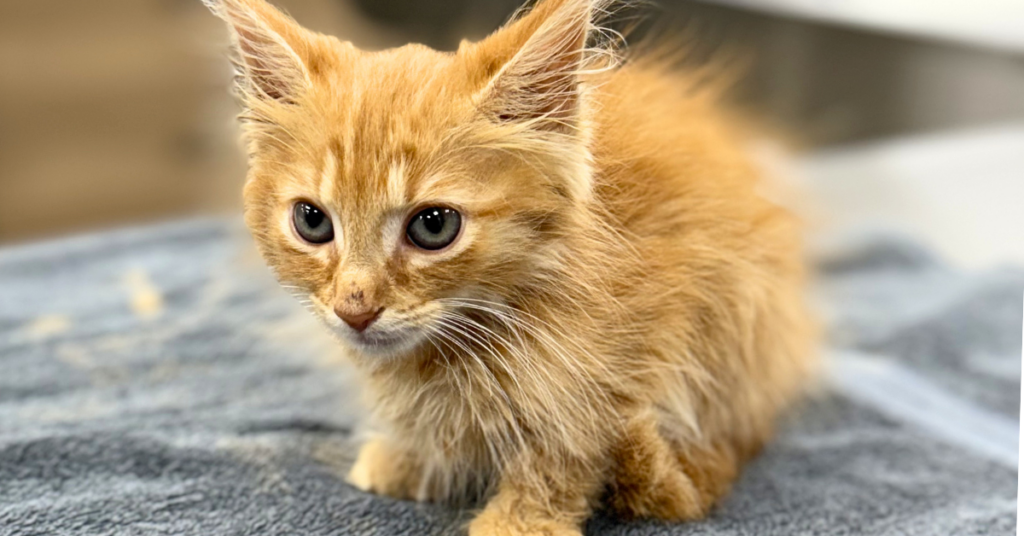
Bringing home a new kitten is an exciting milestone that comes with important responsibilities. The first few weeks set the foundation for your kitten’s lifelong health, behavior, and happiness. From creating a safe environment to scheduling essential veterinary care, being prepared makes all the difference. At Uptown Veterinary Clinic, we’re here to help your new kitten thrive from day one.
Preparing Your Home for a Kitten
Before your kitten arrives, create a calm, safe space where they can adjust. A new home can feel overwhelming, so start small.
Kitten Essentials
Keep your kitten in a quiet room at first and gradually introduce them to the rest of your home. Slow introductions are especially important if you have other pets, helping reduce stress and prevent conflict.
First Day at Home: Calm and Routine
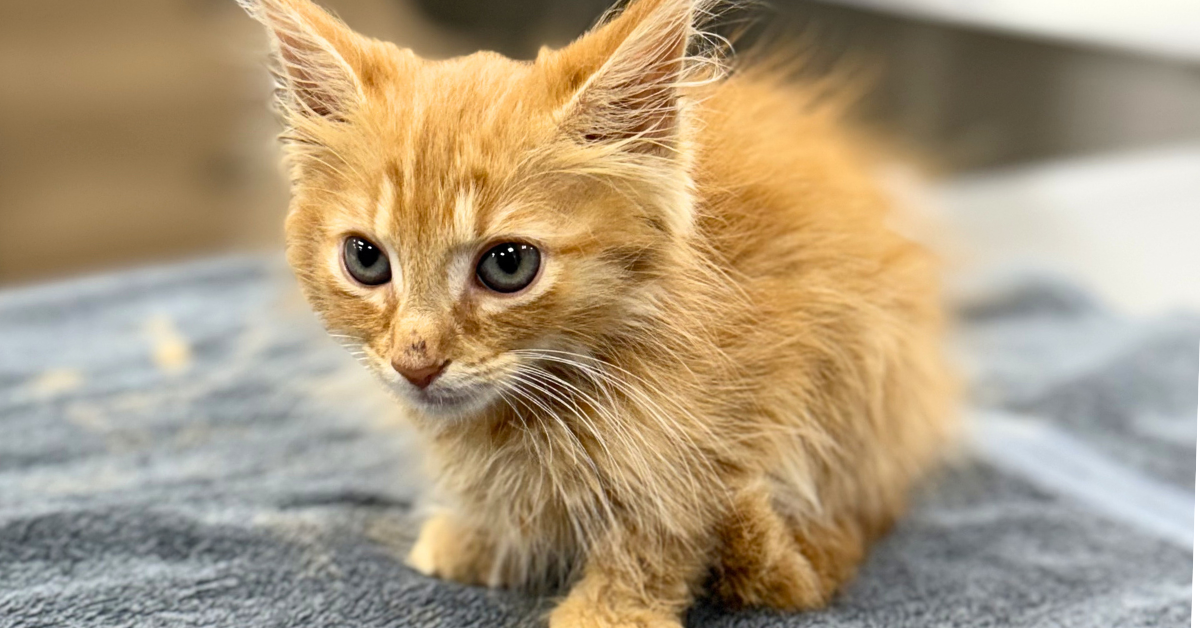
Your kitten's first day home should be a pleasant and calm experience for them. Kitten-proofing the new safe space is important beforehand. Be sure the space can be closed off and free of hazards.
If you have other pet's you may want to wait until your kitten adjusts to the space to introduce them. They know of each other's presence and have plenty of time to get acquainted. Read more about how to make your kitten's first day home the best.
The First Vet Visit: Don’t Wait
One of the most important steps you can take is scheduling your kitten’s first veterinary visit within a few days of bringing them home. Even if your kitten appears healthy, this visit is critical to:
Early exams help identify issues that may not be visible right away and ensure your kitten gets the best possible start.
Kitten Vaccinations
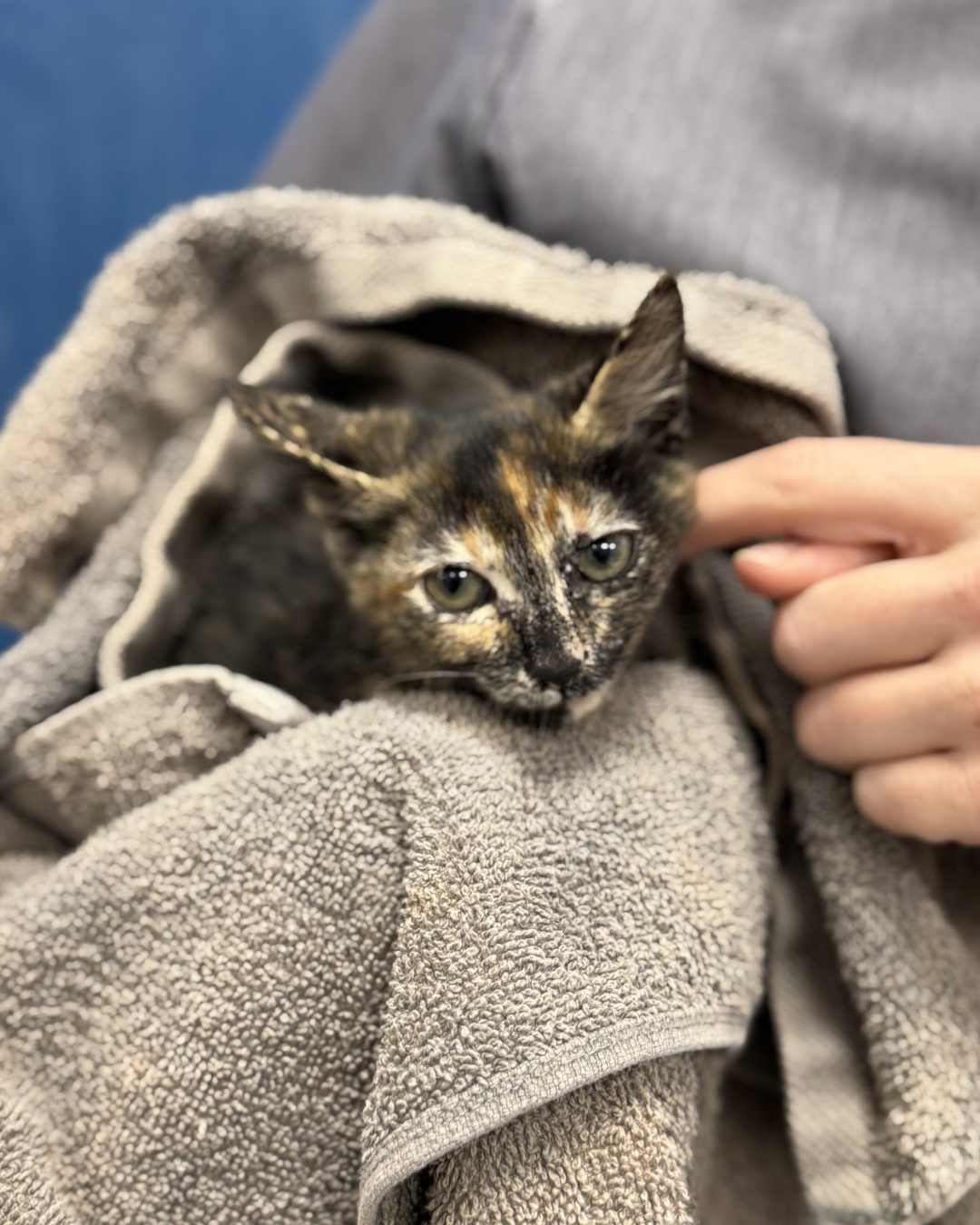 Vaccinations are essential for protecting your kitten from serious and potentially life-threatening diseases. These vaccines are given in a series because kittens are still developing their immune systems. Even indoor kittens need vaccinations, as diseases can still be introduced into the home. Staying on schedule is one of the most important ways to protect your pet.
Core kitten vaccines typically include:
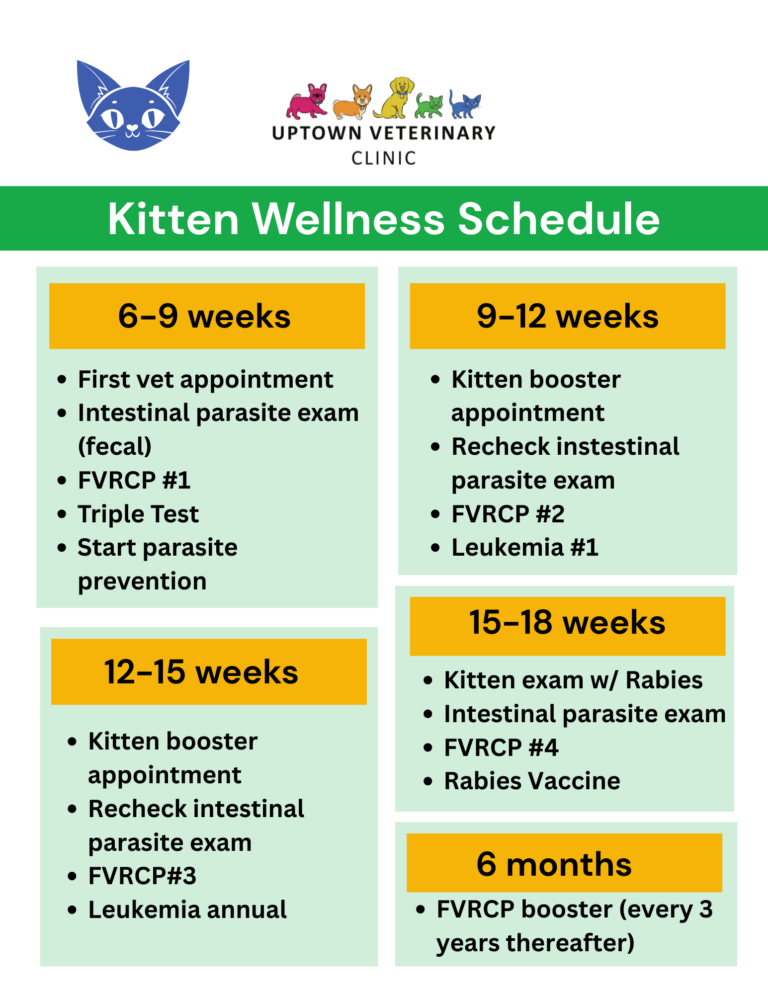
Here is the typical vaccination and lab work schedule for a kitten treated at Uptown Veterinary Clinic.
Parasite Prevention & Testing
Kittens are especially vulnerable to parasites, many of which are not immediately visible. Parasite prevention should begin early and continue year-round, even for indoor cats. During early vet visits, your veterinarian may recommend:
Nutrition & Daily Care
Proper nutrition fuels your kitten’s rapid growth and development. Establishing routines early helps your kitten feel secure and confident.
Socialization & Behavior
The early weeks of your kitten’s life are critical for social development. Positive experiences now can prevent fear and anxiety later. Playtime is also essential. It builds trust and encourages healthy behavior. Expose your kitten gradually to:
Routine Wellness Care
Your kitten’s care doesn’t stop after the first visit. Routine wellness exams are essential for maintaining long-term health. Regular veterinary care allows us to monitor growth, prevent disease, and catch potential issues early. At Uptown Veterinary Clinic, we recommend:
When to Call the Vet
Early intervention can make a significant difference in your kitten’s health. Contact your veterinarian right away if you notice:
Start Strong with Uptown Veterinary Clinic
Bringing home a new kitten is just the beginning of a lifelong bond. With proper veterinary care, nutrition, and attention, your kitten can grow into a healthy, happy companion.
Schedule your kitten’s first wellness exam with Uptown Veterinary Clinic today and give them the best start possible.
More resources:
Check out our services to learn more about vaccinations and when to spay/neuter.
