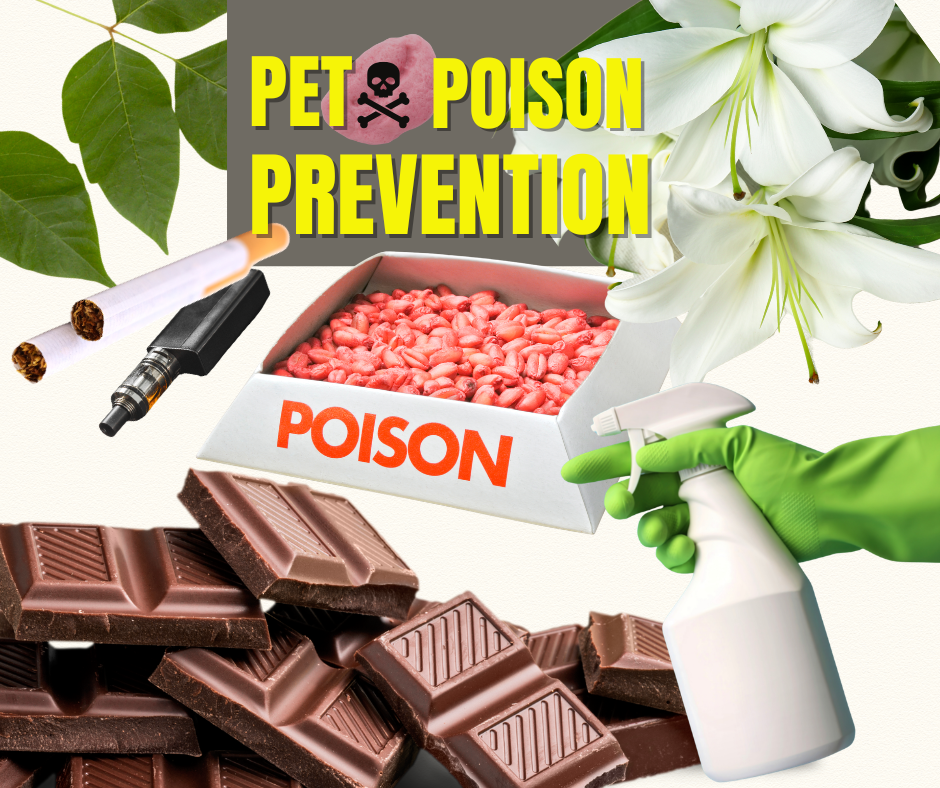

During Pet Poison Prevention Week, veterinarians across the country focus on raising awareness about pet poisoning and the everyday items that can put pets at risk. Many household hazards for pets are things we use daily without thinking twice about them.
Dogs and cats are naturally curious. They explore their environment by sniffing, licking, and chewing that, unfortunately, can lead them to ingest substances that are harmful or even life-threatening. Understanding the most common risks is one of the best ways to prevent poisoning at home.
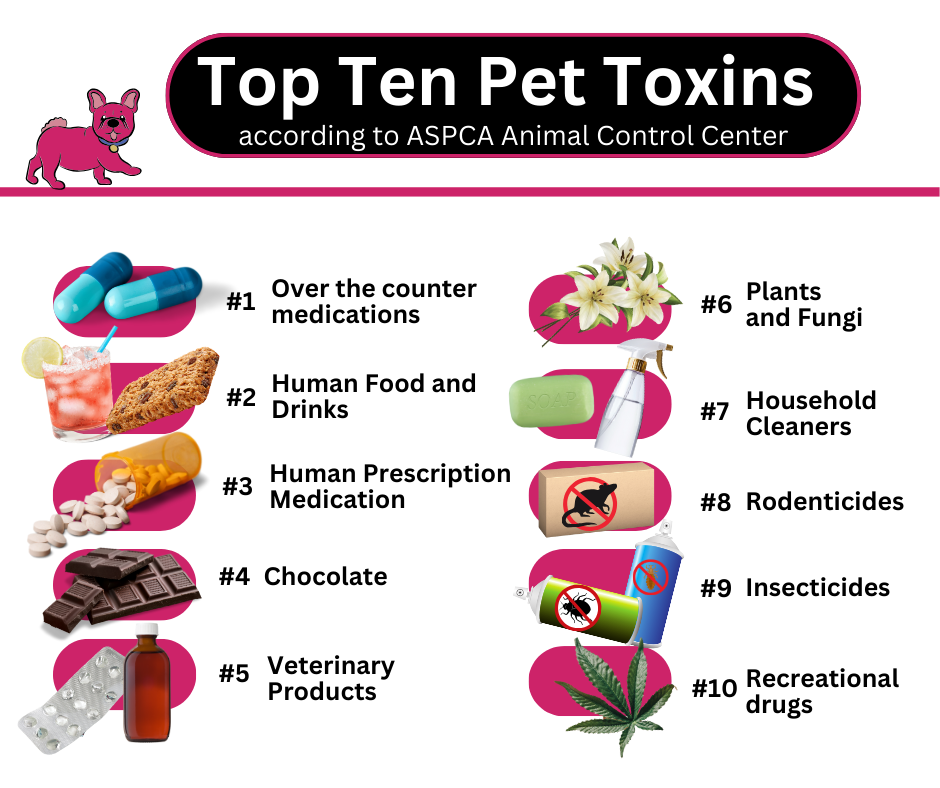
Medications: One of the Most Common Causes of Pet Poisoning
Human medications are a leading cause of pet poisoning. Pets may accidentally eat pills that fall on the floor, chew through pill bottles, or consume medication left on a nightstand or countertop.
Even medications that are safe for people can be extremely toxic to animals. Common culprits include:
- Pain relievers
- Cold and flu medications
- Antidepressants
- Vitamins and supplements
- Sleep aids
Ingesting these medications can cause symptoms like vomiting, tremors, seizures, or serious organ damage. For effective pet poison prevention, always store medications in secure cabinets and never give your pet human medication unless directed by your veterinarian.
Toxic Foods in the Kitchen
Many foods that people enjoy can become dangerous household hazards for pets. Certain ingredients can cause digestive upset, neurological problems, or even organ failure in animals.
Foods that should always be kept away from pets include:
- Grapes and raisins
- Onions and garlic
- Macadamia nuts
- Coffee grounds and tea
- Alcohol
- Excessively salty foods
Garbage and compost can also pose risks. Moldy or spoiled foods may contain toxins that lead to pet poisoning. Keeping trash secured and avoiding feeding pets table scraps are simple steps toward better pet poison prevention.
Household Chemicals and Garage Products
Cleaning supplies, disinfectants, pesticides, paints, and solvents can all become serious household hazards for pets if ingested or inhaled.
Garages are another common source of danger. Products such as antifreeze, motor oil, and fertilizers can be toxic to animals. Antifreeze is particularly dangerous because it has a sweet taste that may attract pets, yet even a small amount can cause severe kidney failure.
To reduce the risk of pet poisoning, always store chemicals securely and clean up spills immediately.
Flea and Tick Products Must Be Used Carefully
Parasite prevention products help keep pets healthy, but incorrect use can cause poisoning. Flea and tick treatments designed for dogs should never be used on cats, as certain ingredients are highly toxic to them.
For safe pet poison prevention, always read product labels carefully and consult your veterinarian before using a new treatment.
Small Objects Can Be Hidden Hazards
Not all household hazards for pets involve chemicals. Small objects such as batteries, coins, electrical cords, and small toys can cause choking, burns, or intestinal blockages if swallowed.
Puppies and kittens are especially likely to chew and explore these items. Pet-proofing your home, similar to childproofing, can help prevent many accidents.
What To Do If You Suspect Pet Poisoning
Even with precautions, accidents can happen. Know the signs of pet poisoning so you can respond quickly.
Symptoms may include:
- Vomiting or diarrhea
- Excessive drooling
- Tremors or seizures
- Weakness or lethargy
- Difficulty breathing
If you suspect your pet has ingested something toxic, pick up the phone and call your veterinarian, or the ASPCA Animal Poison Control Center (1-888-426-4435) or Pet Poison Helpline (1-855-764-7661). A consultation fee may apply. Have your pet’s breed, age, weight, symptoms, and the suspected toxin or product available.
Protect Your Pet Through Prevention
Pet Poison Prevention Week is a great reminder that keeping pets safe starts with awareness. By identifying household hazards for pets and storing potentially toxic items properly, you can greatly reduce the risk of pet poisoning.
If you have questions about toxins or need guidance on pet poison prevention, the team at Uptown Veterinary Clinic is always here to help keep your pets happy, healthy, and safe.