
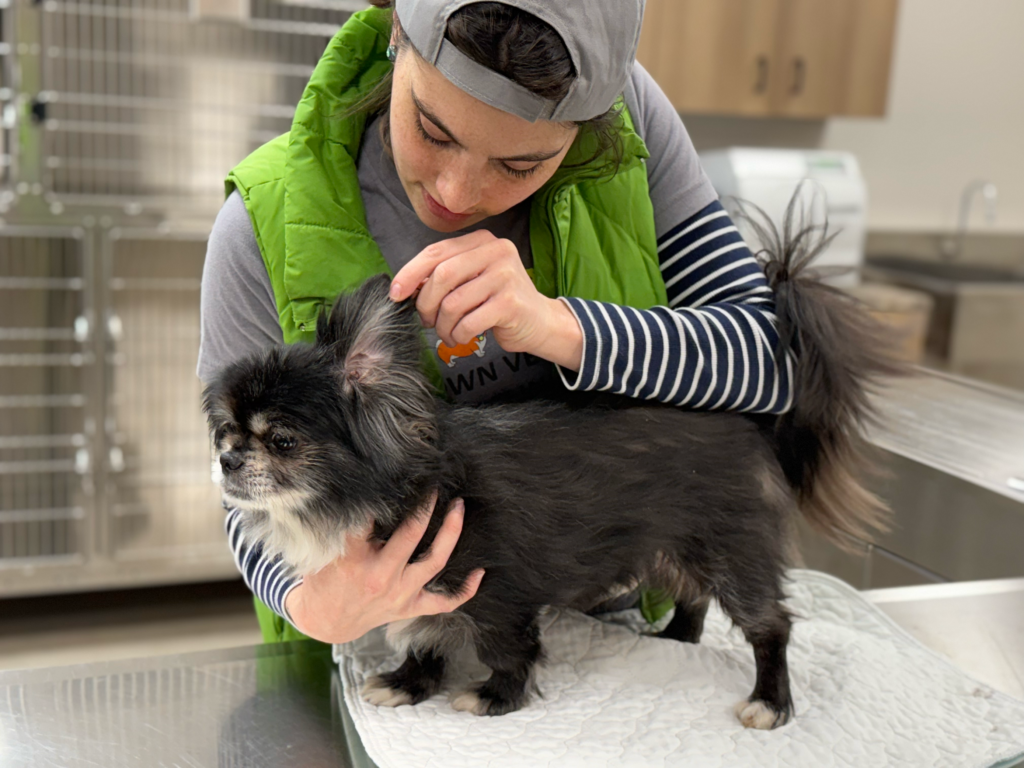

Pet ear care is an essential part of keeping your dog healthy and comfortable. Ear problems are one of the most common reasons pets visit the veterinarian, and many pet ear infections start with subtle symptoms that can be easy to miss. Without proper care, ear issues can quickly become painful, chronic, and difficult to treat.
Dr. Teeples says, “Just keep an eye on the ears!” At Uptown Veterinary Clinic, we believe that proactive pet ear care and early detection are the best ways to prevent ear infections and keep your dog feeling their best. This guide will help you understand how to care for your dog’s ears, recognize the signs of a pet ear infection, and know when it’s time to call your veterinarian.
Why Pet Ear Care Is So Important
Your dog’s ear anatomy makes them more vulnerable to infection than humans. Dogs have an L-shaped ear canal that easily traps moisture, wax, and debris. This warm, dark environment is ideal for bacteria and yeast to grow especially without regular pet ear care.
Dogs with floppy ears, thick hair in the ear canal, who frequently swim, or who have allergies and skin conditions are more prone to ear infections. Even dogs without these risk factors can develop ear infections when we have sudden weather changes like we have experienced lately, which is why routine pet ear care should be part of every dog’s wellness routine.
How to Practice Proper Pet Ear Care at Home
Check Your Dog’s Ears Weekly
Routine checks are one of the most effective pet ear care habits. Healthy ears should appear clean and light pink, have little to no odor, and be free of swelling, redness, or discharge. Early detection can prevent a mild irritation from becoming a full pet ear infection.
Clean Your Dog’s Ears Safely
Not all pets need frequent ear cleaning, and over-cleaning can cause irritation. Your veterinarian can help determine the right schedule for your dog’s pet ear care needs.
Safe ear cleaning tips:
- Use only veterinarian-recommended ear cleaners
- Avoid alcohol, hydrogen peroxide, or home remedies
- Gently massage the base of the ear after applying cleaner
- Allow your dog to shake their head
- Wipe visible debris with cotton balls or gauze (never cotton swabs)
If your dog shows signs of pain during cleaning, stop and contact your veterinarian.
Keep Your Dog’s Ears Dry
Moisture is a leading cause of pet ear infections. After bathing or swimming be sure to gently dry the outer ear. Consider using a drying ear solution recommended by your veterinarian. It is common for dogs who swim often to require preventive pet ear care to reduce infection risk.
Address Underlying Health Issues
Allergies are one of the most common causes of recurring pet ear infections. Dogs with environmental or food allergies may need long-term management to prevent chronic ear problems. We offer special nutritional counseling to help identify these allergy triggers and develop a treatment plan.
Signs of a Pet Ear Infection
Knowing how to spot a pet ear infection early can help prevent pain and complications. Common symptoms include:
Behavioral Signs
- Head shaking
- Scratching or pawing at the ears
- Rubbing ears on furniture or the floor
- Sensitivity when ears are touched
- Changes in behavior or irritability
Physical Signs
- Redness or swelling inside the ear
- Strong or unpleasant odor
- Brown, yellow, or bloody discharge
- Crusty buildup around the ear opening
- Hair loss around the ears
Severe or Advanced Symptoms
- Head tilt
- Loss of balance
- Pain when opening the mouth
- Hearing changes
If your pet shows any of these signs, they may have a pet ear infection and should be examined by a veterinarian promptly. (Book a sick visit here.)
Common Types of Pet Ear Infections
Understanding the type of pet ear infection helps explain why treatment varies.
Yeast Infections
Often linked to allergies, yeast infections typically cause intense itching, dark brown discharge, a strong, musty odor.
Bacterial Infections
Bacterial pet ear infections may cause yellow or green discharge, significant redness and swelling, pain and sensitivity.
Ear Mites
Most common in puppies and young dogs, ear mites cause severe itching, dark, crumbly debris resembling coffee grounds, and are easy to spread to other pets in the household.
Each type of pet ear infection requires specific treatment, which is why proper diagnosis is essential.
Why At-Home Treatment Can Be Risky
Treating a pet ear infection without veterinary guidance can lead to complications. Using the wrong medication or leftover ear drops may worsen the infection, mask symptoms without resolving the cause, damage the ear canal or eardrum, or contribute to chronic ear disease. Always defer accurate diagnosis and targeted treatment to your veterinary care team..
When to Call a Veterinarian for Pet Ear Care
Contact your veterinarian if:
- You notice signs of ear pain or discomfort
- Your dog has discharge, odor, or redness
- Symptoms last more than 24–48 hours
- Your pet has recurring ear infections
- Your dog resists ear handling due to pain
Remember, early intervention improves comfort and reduces the risk of long-term ear damage.
What to Expect During a Veterinary Ear Exam
At Uptown Veterinary Clinic, we provide thorough and compassionate pet ear care. During your visit, your veterinarian will examine the ear canal with an otoscope, check the eardrum, examine ear debris under a microscope, prescribe targeted medications for your pet’s infection, and perhaps recommend a follow-up visit or preventative strategies. For pets with chronic issues, we may develop a long-term pet ear care plan to reduce future infections.
Preventing Future Pet Ear Infections
While not all pet ear infections are preventable, consistent care can significantly reduce risk:
- Perform regular ear checks (remember, “Keep an eye on the ear!”)
- Clean ears only as recommended
- Keep ears dry
- Address allergies early
- Schedule routine wellness exams
Preventive pet ear care supports long-term comfort and health.
Compassionate Pet Ear Care at Uptown Veterinary Clinic
Pet ear infections can be painful, frustrating, and stressful for both pets and their families. If you notice changes in your dog’s ears or behavior, the team at Uptown Veterinary Clinic is here to help. We’re committed to providing expert pet ear care, accurate diagnosis, and personalized treatment plans to keep your dog happy, healthy, and comfortable.
Contact Uptown Veterinary Clinic today if you have concerns about your pet’s ears. Call (706)221-4115 or schedule an exam here.