A spooky Halloween doesn’t have to be scary for your pets. From tempting candy bowls to frightening decorations and a constant stream of visitors at the front door, there are several things pet parents should keep in mind to make sure their dogs and cats have a safe and happy Halloween.
At Uptown Veterinary Clinic, we want your pets to enjoy the season just as much as you do! Here are our top tips for keeping your furry friends safe this Halloween.
Put it up
Keep Halloween Candy Out of Paws Reach
Halloween candy may be a treat for us, but it can be dangerous for our pets. Chocolate contains ingredients that are toxic to dogs and cats, and darker chocolate generally poses a greater risk. Sugar-free candies and gum may contain xylitol, an artificial sweetener that can cause a dangerous drop in blood sugar in dogs. Raisins and certain other ingredients can also be harmful.
Candy safety:
Store candy in a closed container or cabinet, well out of reach.
Remind children not to share Halloween treats with their pets.
Keep candy wrappers off the floor, since swallowed wrappers can cause digestive problems or blockages.
Offer pet-friendly treats instead if your furry friend wants to join the fun.
If your pet eats chocolate, sugar-free candy, or another potentially toxic substance, contact your veterinarian or an animal poison control service promptly. Don’t wait for symptoms to appear, and don’t induce vomiting unless a veterinary professional tells you to do so.
Dress Up or Don't
Choose Pet-Friendly Costumes
Dressing up your pet can make for adorable Halloween photos, but not every animal enjoys wearing a costume. If your pet is comfortable dressing up, choose an outfit that fits properly and allows them to move, breathe, see, and hear without difficulty.
Before heading out for a photo session or Halloween gathering, check that the costume:
Doesn’t restrict movement or breathing.
Doesn’t cover the eyes or block the ears.
Has no small pieces, loose strings, or decorations that could be chewed off and swallowed.
Doesn’t cause overheating or excessive stress.
Introduce costumes gradually and reward your pet with praise and treats. Watch their body language, and remove the outfit if they seem uncomfortable. A festive bandana or seasonal collar can be a great alternative for pets who prefer to keep things simple.
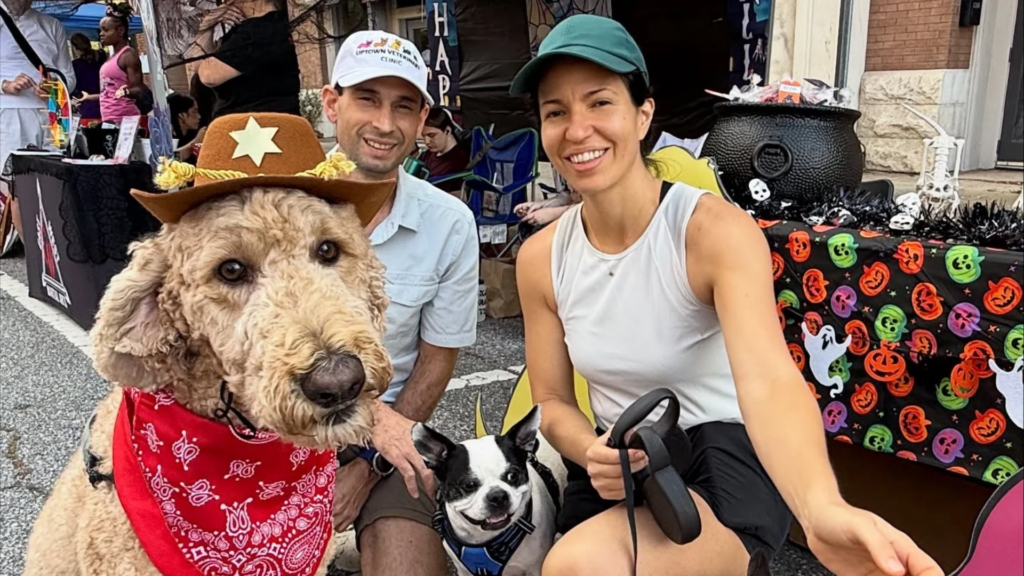
Biscuit's sheriff costume was simple yet effective.
Wagging Tails and Swiping Paws
Be Careful With Halloween Decorations
Glowing pumpkins, flickering candles, fake cobwebs, and spooky props help create a Halloween atmosphere, but they can also pose risks to curious pets.
Wagging tails can knock over candles, cats may climb decorations, and dogs may chew on unfamiliar objects. Electrical cords and battery-operated decorations can also cause injuries if chewed or swallowed.
Keep these precautions in mind:
Use flameless candles instead of open flames whenever possible.
Secure electrical cords and keep them away from chewing mouths.
Keep small decorations, plastic spiders, fake cobwebs, and other tempting objects out of reach.
Prevent pets from chewing on pumpkins or decorative gourds, especially if they are moldy or treated with chemicals.
Supervise pets around new decorations until you know how they’ll react.
A little planning can help keep your Halloween display spooky without making it dangerous.
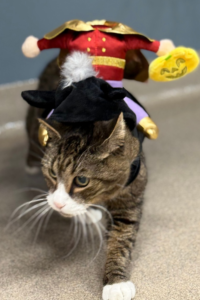
Bootsie Chaps with the Headless Horseman on his back.
Keep Anxiety Away
Create a Quiet, Safe Space Away From the Front Door
For many pets, the scariest part of Halloween isn’t ghosts or goblins. It’s the doorbell ringing repeatedly and unfamiliar people appearing at the house all evening!
Even friendly pets can become anxious or overexcited when trick-or-treaters arrive. An open front door also creates an opportunity for a dog or cat to slip outside and become lost.
Consider setting up a comfortable spot away from the action. Include your pet’s bed, fresh water, favorite toys, and a few treats. Playing soft music or using familiar background noise may help some pets relax.
You can also:
Keep cats indoors, especially black cats who may be harder to see outdoors at night.
Make sure your pet wears a collar with current identification.
Check that your pet’s microchip registration information is up to date.
Use a baby gate or closed interior door to create an extra barrier between your pet and the front entrance.
If your pet is fearful of visitors, don’t force them to participate in the festivities. A quiet evening in a safe space may be the best Halloween treat of all.
Use Street Smarts
Take Extra Care During Halloween Walks
If you plan to walk your dog on Halloween, choose a route and time that works for your pet’s temperament. Busy sidewalks, excited children, unfamiliar costumes, and loud noises can overwhelm even well-socialized dogs.
For a safer outing:
Keep your dog on a secure leash and use a well-fitted collar or harness.
Walk during a quieter time if your dog is nervous around crowds.
Use reflective gear or a light-up collar to improve visibility after dark.
Avoid letting your dog approach strangers in costumes without a calm, appropriate introduction.
Watch for dropped candy, wrappers, glow sticks, and other hazards along the sidewalk.
Not every dog enjoys trick-or-treating, and that’s perfectly fine. A familiar walk before the festivities begin can be a better option for pets who prefer a predictable routine.
Nauseous Novelties
Know Which Halloween Items Can Be Hazardous
Candy isn’t the only Halloween concern. Glow sticks and glow jewelry may cause intense drooling, nausea, or irritation if chewed. Certain decorations, batteries, and small toys can cause serious problems if swallowed. Essential oils and other ingredients in seasonal products may also be unsafe for pets, depending on the substance and exposure.
Secure potentially hazardous items, and supervise pets around anything new or unfamiliar.
If you suspect your pet has swallowed a foreign object or been exposed to a potentially toxic product, contact your veterinarian promptly. Seek emergency veterinary care for difficulty breathing, collapse, seizures, or other severe symptoms.
When in doubt, it’s always safer to ask a veterinary professional than to wait and see what happens.
Have a Happy and Safe Halloween From Uptown Veterinary Clinic!
If your pet gets into Halloween candy, swallows a decoration, or shows signs of illness after a possible exposure, contact your veterinarian or an appropriate emergency veterinary service for guidance.
From all of us at Uptown Veterinary Clinic, we wish you and your furry family members a safe, happy, and only slightly spooky Halloween!