
Your Guide to a Healthy Start
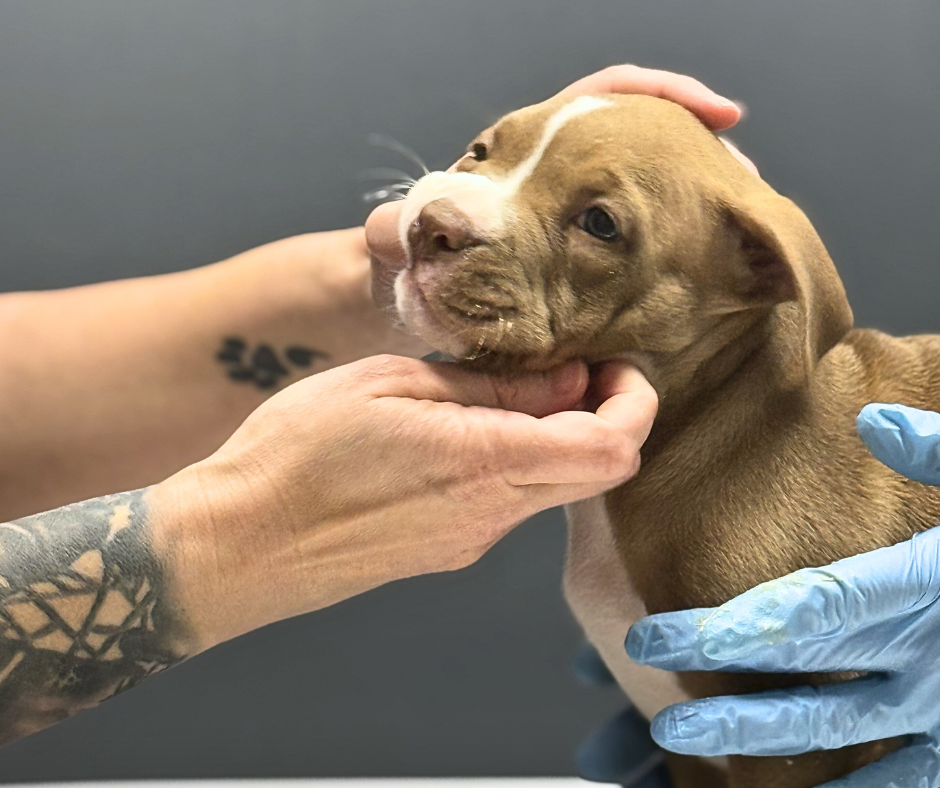
Bringing home a new puppy is an exciting and joyful experience that comes with important responsibilities. From preparing your home to scheduling early veterinary care, a little planning goes a long way in helping your puppy grow into a healthy, happy adult dog.
At Uptown Veterinary Clinic, we’re proud to support pet owners in Columbus, GA and Phenix City, AL with expert guidance through every stage of puppyhood.
Preparing Your Home for a Puppy
Before your puppy arrives, creating a safe and welcoming environment is essential.Setting up your home ahead of time helps reduce stress and makes the transition smoother for both you and your puppy.
Puppy-Proofing Tips
Must-Have Supplies

First Day at Home: Calm and Routine
The first day should be calm and structured. Limit your puppy’s access to a designated area so they aren’t overwhelmed by new smells and spaces. Show them where their crate, food, and potty area are, and introduce family members gradually. Keep other pets calm and supervised during initial introductions.
Begin establishing a routine immediately: feed at set times, offer frequent potty breaks (especially after eating, waking up, or playing), and plan relaxed play sessions followed by naps. Puppies need lots of sleep (up to 16–18 hours a day) and a predictable schedule helps them feel secure.
The First Vet Visit
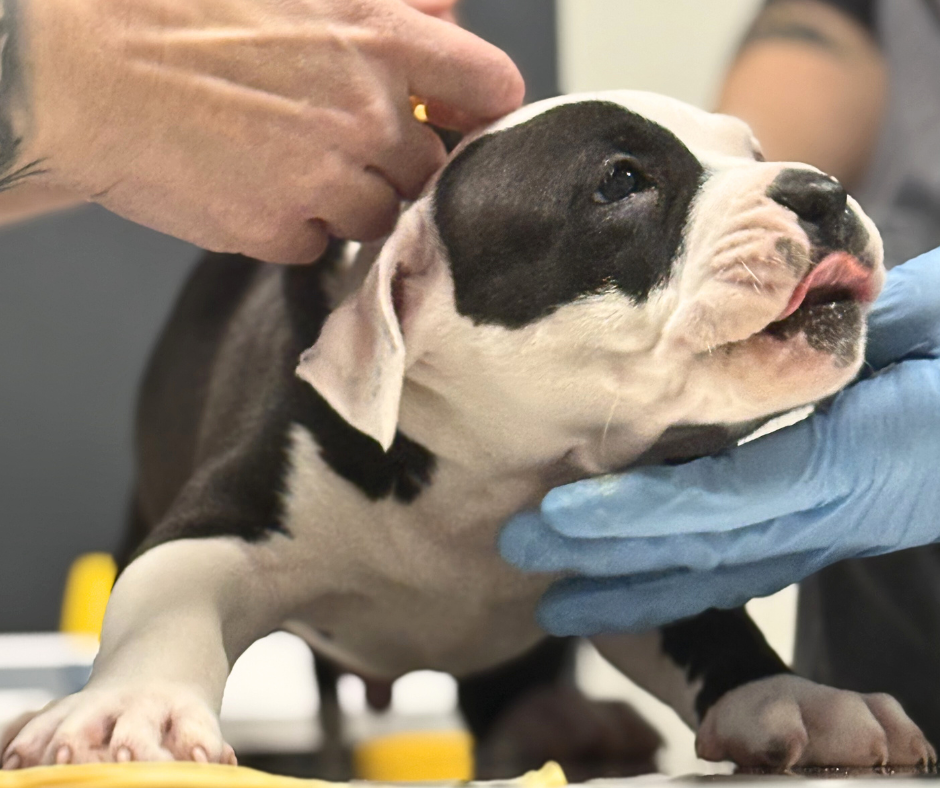 Your puppy’s first veterinary visit should happen within the first few days of bringing them home.This visit establishes a baseline for your puppy’s health and allows us to create a personalized wellness plan.
During this visit, your veterinarian will:
Puppy Vaccinations
Vaccinations are critical to protecting your puppy from serious, preventable diseases—especially during their early months when their immune system is still developing.
Core Vaccines
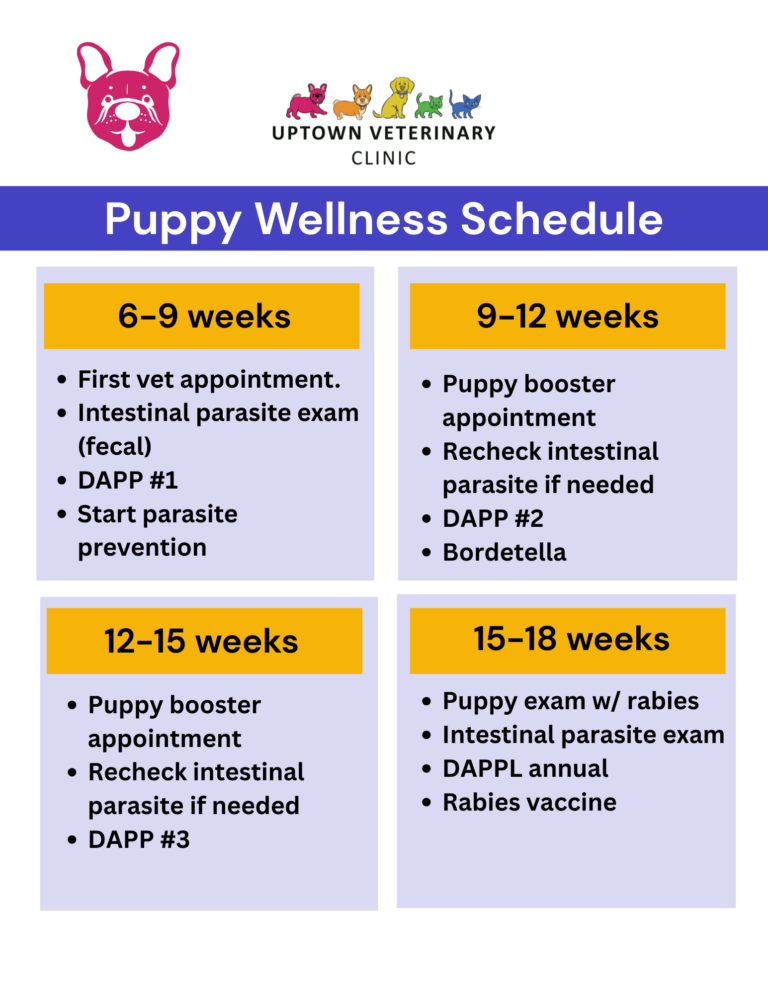
Puppies typically receive a series of vaccines every 2–4 weeks starting at 6–9 weeks of age, including:
Lifestyle Vaccines
Depending on your puppy’s environment and exposure risk, additional vaccines may be recommended:
Staying on schedule with vaccinations is one of the most important steps you can take to protect your puppy’s health.
Parasite Prevention and Testing
Puppies are especially vulnerable to parasites, many of which can affect both pets and people. Early prevention is key to avoiding serious health complications.
Common Parasites in Puppies
Recommended prevention methods
Nutrition and Daily Care
Proper nutrition fuels your puppy’s growth and development.
Feeding Your Puppy
Daily Care Essentials
Establishing healthy habits early sets the foundation for lifelong wellness.
Consistency is key. Sit down with family members to decide who feeds your puppy, takes them out for potty breaks, and handles evening walks. Establish house rules early (like furniture access or meal and play routines) and stick to them so your puppy learns expectations quickly. Conflicting signals can confuse even the smartest pups.
Socialization and Behavior
The early weeks of a puppy’s life are critical for behavioral development. Proper socialization helps prevent fear and anxiety later in life.
Socialization Tips
Training Basics
Routine Wellness
Puppies require frequent veterinary visits during their first few months.
What to Expect
When to Call the Vet
Knowing when to seek veterinary care can make all the difference.
Contact your veterinarian if your puppy shows:
If you’re ever unsure, it’s always best to call. Early intervention is key!
Start Strong with Uptown Veterinary Clinic
Bringing home a new puppy is just the beginning of a lifelong bond. With proper veterinary care, nutrition, and attention, your puppy can grow into a healthy, happy companion.
Schedule your puppy’s first wellness exam with Uptown Veterinary Clinic today and give them the best start possible.
Here are some additional resource links: