One of the first tasks at hand when bringing home a new puppy or adult dog is figuring out where they will go potty.
Whether you’re housetraining a puppy for the first time or helping an adult dog adjust to a new home, the most effective approach is built around consistency, supervision, routine, and positive reinforcement. Accidents are part of the learning process, and they don’t mean your dog is being stubborn or spiteful.
At Uptown Veterinary Clinic in Columbus, GA, we want to help you build healthy habits with your dog from the beginning. Here’s what every pet parent should know about successful dog potty training.
As long as it takes
How Long Does it Take to Housetrain a Dog?
There’s no universal timeline for housetraining. Some puppies catch on quickly, while others need several weeks or months of consistent practice. Adult dogs may already have good bathroom habits but still need a refresher when moving into a new home.
The important thing is to focus on consistent success rather than expecting perfection.
During housetraining, your dog should have limited opportunities to make mistakes indoors. Veterinary behavior guidance recommends maintaining close supervision until the desired habit is firmly established. One useful benchmark is waiting until your dog has been accident-free for about a month before gradually giving them more freedom around the house.
Housetraining Tips for Puppies
Supervise Your Dog Closely
The first rule of puppy house training is supervision.
When your puppy or newly adopted adult dog is loose indoors, keep them where you can see them. If you can’t supervise your dog, place them in a safe, appropriately sized confinement area, such as a crate, exercise pen, or gated space.
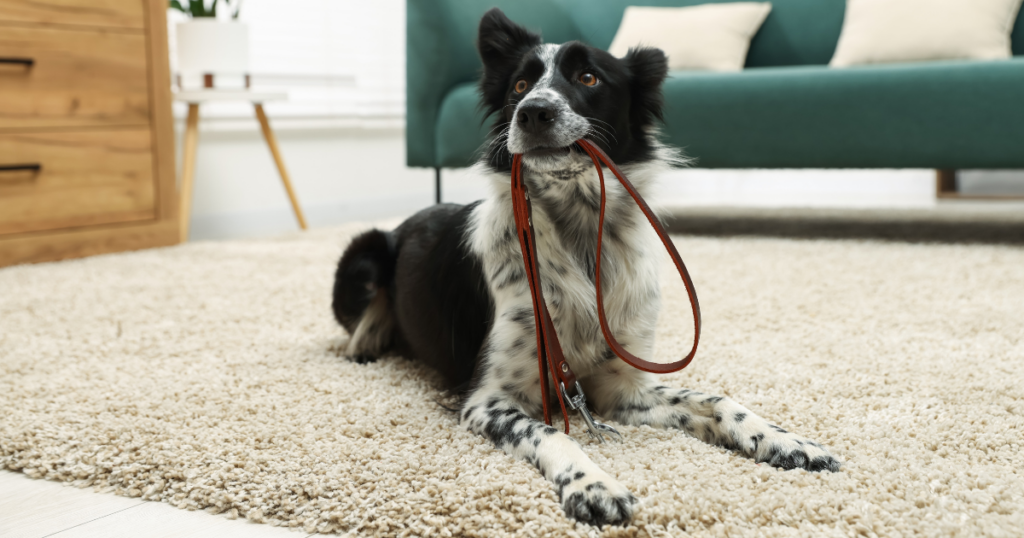
A leash can also be helpful when you’re home. Keeping your puppy nearby makes it easier to notice signs that they need to go outside.
Watch for behaviors such as:
Sniffing the floor
Circling
Wandering away from the family
Restlessness, Whining, and Pacing
Heading toward a previous accident spot.
The goal isn’t to watch your dog forever. It’s to prevent accidents while they’re learning, then gradually increase their freedom as they become reliable.
Create a Consistent Potty Schedule
A predictable routine can make house training a puppy much easier.
Young puppies have small bladders and generally need to eliminate more frequently than adult dogs. Take your puppy outside regularly, particularly:
First thing in the morning
After taking a nap
After eating/drinking
After playing or excitement
Before bedtime
Very young puppies may need bathroom breaks as often as every hour, with even more frequent trips during active play. Take young puppies outside regularly, including after play and within about 20 minutes of eating.
Regular meal times can also make your dog’s bathroom schedule more predictable. Your veterinarian can help you establish an appropriate feeding and potty routine based on your puppy’s age, size, diet, and individual needs.
Take Your Dog to the Same Potty Spot
When possible, take your dog to the same designated bathroom area each time.
Keep your dog on a leash and stay with them. Don’t simply let your puppy outside and assume they’ll take care of business.
Give them time to sniff and eliminate, and consider using a consistent cue such as, “Go potty.”
Say the cue while your dog is actually eliminating. Over time, your dog can learn to associate the phrase with the behavior.
Once they finish, immediately offer praise and a reward.
Reward Your Dog Immediately
Positive reinforcement is one of the most important parts of successful dog potty training. When your dog eliminates in the correct location, reward them immediately. You might use:
A small treat
Praise
Petting
A favorite toy
The timing matters. If your dog goes potty outside and you wait five minutes to offer a treat after returning indoors, they may not understand what they’re being rewarded for. Be sure to reward behaviors immediately. This helps your dog make the connection between the behavior and the positive outcome.
Clean Puppy Accidents Thoroughly
Accidents are normal during housetraining. What matters is how you respond to them.
Use an enzymatic cleaner specifically designed to remove pet urine and odors. Dogs have a much stronger sense of smell than humans, and residual odors can encourage them to return to the same location. If your dog repeatedly returns to the same area, don’t assume they’re simply being difficult. The smell of previous accidents may still be present.
For stubborn urine spots, a black light can help identify areas that need additional cleaning. In some cases, urine can soak through carpet and into the padding underneath.
Don't Punish Your Dog for Accidents
One of the biggest mistakes pet owners can make during puppy potty training is punishing accidents.
Yelling, hitting, rubbing your dog’s nose in the mess, or using other punishment doesn’t teach your dog where you want them to eliminate. Instead, punishment can make dogs afraid to eliminate in front of their owners.
If you catch your dog having an accident, calmly interrupt them and take them outside. If they finish outside, reward them. If you discover an accident after it has already happened, simply clean it thoroughly.
Your dog isn’t trying to make you angry. They’re learning what you expect.
Housetraining Tips for Adult Dogs
Yes, you can housetrain an adult dog. In fact, the process for housetraining an adult dog is very similar to housetraining a puppy.
An adult dog may have learned different bathroom habits in a previous home, or they may never have been completely housetrained. Dogs adopted from shelters or rescues may also need time to learn the routines and expectations of their new household.
Start with the basics:
Supervise Your Dog Indoors
Take Them Outside Frequently
Use a consistent bathroom location
Reward outdoor elimination immediately
Clean indoor accidents thoroughly
Avoid punishment
Gradually increase freedom as your dog becomes reliable
Adult dogs may also need time to develop better bladder and bowel control if they haven’t previously had the opportunity to establish a consistent routine.
What If My Housetrained Dog Suddenly Has Accidents?
A sudden change in bathroom habits deserves attention.
If a dog that has been reliably housetrained suddenly starts urinating or defecating indoors, don’t automatically assume the problem is behavioral.
Medical conditions can cause increased frequency, urgency, or changes in urine or stool. Veterinary Partner recommends ruling out medical causes when a dog develops new house-soiling problems.
Contact your veterinarian if you notice:
A sudden increase in accidents
Frequent urination
Straining or apparent discomfort while urinating
Increased thirst
Changes in stool or bowel habits
Blood in the urine or stool
Accidents despite a consistent potty-training routine
Other changes in appetite, energy, or behavior
A veterinary examination can help determine whether your dog’s accidents are related to a medical condition, behavior, or both.
Can Crate Training Help With Housetraining?
A properly used crate can be a helpful management tool during housetraining.
Dogs generally prefer not to soil their sleeping area, so a properly sized crate can help prevent accidents when you can’t directly supervise your puppy.
However, a crate isn’t a substitute for regular bathroom breaks. Leaving a puppy confined for too long can result in an accident and make housetraining more difficult.
The crate should be large enough for your dog to stand, turn around, and lie down comfortably but not so large that they can easily designate one end as a bathroom.
Your veterinarian can help you determine whether crate training is appropriate for your individual puppy and how to incorporate it into a house training routine.
When to Call Your Veterinarian About Accidents
Housetraining takes time, but persistent or sudden problems shouldn’t always be treated as a training issue.
If your puppy isn’t progressing despite consistent management, or your adult dog suddenly starts having accidents, talk with your veterinarian.
A veterinary team can help determine whether there is an underlying medical problem and can also help you identify behavioral factors that may be contributing to house soiling. If your dog’s bathroom habits suddenly change or you’re struggling to make progress, don’t hesitate to ask your veterinary team for help.
Have questions about your puppy or adult dog’s potty habits? Contact Uptown Veterinary Clinic in Columbus, GA, to schedule a veterinary visit.
At Uptown Veterinary Clinic, we provide veterinary care for dogs and cats in Columbus, GA, with an emphasis on individualized care and clear communication with pet owners.